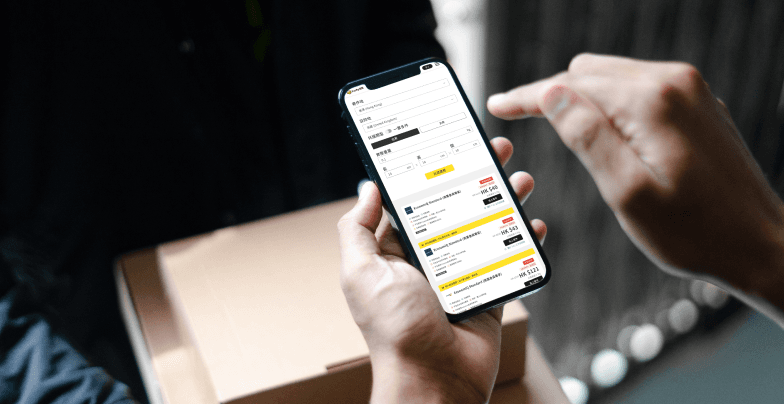
Confused about the prices of 20ft and 40ft containers? Feeling overwhelmed by complicated sea freight procedures and customs documents? Whether you're an e-commerce seller new to international trade or arranging large-volume shipments for your company, the uncertainties in container shipping can be daunting. The Fuuffy international express price comparison platform solves these pain points by integrating top logistics providers to offer transparent quotes for container transport. Simply enter your cargo details to compare FCL and LCL solutions with one click, easily finding the most cost-effective international freight option. Say goodbye to hidden fees and experience the smartest container booking service today.
Choosing the right container is the first step to successful sea freight and a key factor in cost control. A wrong choice can lead to wasted space, soaring transport costs, or even cargo damage. The most common containers on the market are the 20ft standard, 40ft standard, and 40ft High Cube (HQ), each catering to different shipping needs. Understanding their dimensions, capacity, and applications will help you make the most informed decision. For instance, a 20ft container has an internal capacity of about 33 cubic meters (CBM) and is suitable for heavy machinery or high-density goods. A 40ft container doubles that capacity to around 67 CBM, making it better for light but bulky items like furniture or textiles. Besides standard General Purpose (GP) containers, there are also special containers like Reefer (refrigerated) and Open Top containers to meet the specific needs of temperature-controlled products or oversized cargo. When planning your shipment, accurately calculating the total volume (CBM) and weight of your cargo is crucial. Generally, if your cargo volume exceeds 15 CBM, opting for a 20ft FCL container might be more cost-effective than LCL (Less than Container Load). The Fuuffy platform can automatically recommend the most suitable container type based on your cargo details and instantly compare FCL and LCL quotes from different suppliers, freeing you from a sea of complex calculations.
The 20ft General Purpose Container is the most common and cost-effective option in global logistics, especially suitable for small to medium-sized shipments. Its standard internal dimensions are approximately 5.9m (L) x 2.35m (W) x 2.39m (H), offering about 33 cubic meters (CBM) of loading space with a maximum payload of up to 28 tons. This means it can easily accommodate about 10 standard pallets of goods. For businesses new to international trade, individuals shipping personal furniture, or transporting high-density, low-volume goods (like machinery parts or building materials), the 20ft container is the perfect starting point. Through the Fuuffy platform, you can easily get real-time quotes for 20ft containers from Hong Kong to major global ports, with a clear breakdown of sea freight, terminal fees, and documentation charges, ensuring price transparency to help you control your budget accurately.
When your cargo volume exceeds the capacity of a 20ft container, the 40ft General Purpose (40' GP) and 40ft High Cube (40' HQ) containers are your ideal upgrade. The 40' GP offers about 67 CBM of space, double that of a 20ft container, making it perfect for light but bulky goods like apparel, toys, or electronics. The 40' HQ is about 30 cm taller, increasing the total capacity to 76 CBM. This provides extra loading flexibility for cargo that is close to the height limit of a standard container, helping you avoid extra fees. The cost per cubic meter for a 40ft container is often lower than using two 20ft containers. The Fuuffy platform allows you to compare the prices of 40' GP and HQ containers side-by-side, helping you determine if the extra space is worth the slight increase in cost.
For cargo with special transportation needs, standard dry containers are not sufficient. This is where specialty containers come in. For example, a Reefer Container has a built-in refrigeration system that can maintain temperatures between -25°C and +25°C, making it essential for shipping food, pharmaceuticals, or chemicals. An Open Top Container has a removable tarpaulin roof, allowing for top-loading of oversized or irregularly shaped heavy machinery. Another type is the Flat Rack Container, which has no side walls or roof, specifically designed for transporting vehicles, large pipes, and other out-of-gauge cargo. While these specialty containers are more expensive to hire, they ensure the safe transport of special goods. On Fuuffy, you can also inquire about quotes for specialty containers on select routes, letting professional logistics teams handle your complex shipping challenges.
No matter which size or type of container you need, comparison is the key to saving money. Get an instant quote on Fuuffy now to save time and money!
The price of container sea freight is not fixed; it is dynamically determined by various factors. The most critical decision point is choosing between Full Container Load (FCL) and Less than Container Load (LCL). FCL means you have exclusive use of an entire container. The fee is charged for the whole container, regardless of whether it's full, and is usually a flat rate. The advantages are high cargo security, fewer transit points, and a relatively stable transit time. LCL, on the other hand, involves consolidating your goods with other customers' cargo in the same container. The fee is calculated based on the cargo's volume (CBM) or weight (in tons), whichever is greater. LCL is suitable for smaller shipments and may seem cheaper initially, but its overall cost structure is more complex, including more warehouse handling, consolidation, and deconsolidation fees. Also, transit times are longer due to multiple handling stages. Beyond the FCL/LCL choice, factors like peak season surcharges (e.g., before Chinese New Year, Christmas season in the West), fuel surcharges, currency fluctuations, port congestion, and carrier space availability all directly impact the final price. Therefore, a comprehensive quote should include not just the ocean freight but all potential surcharges. The Fuuffy platform was created to solve this information asymmetry. It breaks down all costs clearly, allowing you to see the total cost at a glance and easily compare the real price differences between FCL and LCL from various suppliers, helping you make the best business decision.
FCL vs. LCL Comparison Chart
To help you better understand the differences between Full Container Load (FCL) and Less than Container Load (LCL), we have prepared the comparison chart below. The table clearly illustrates the core differences in cost structure, transit time, cargo security, and operational flexibility. For customers with larger cargo volumes (typically over 15 CBM) who prioritize timeliness and security, FCL is undoubtedly the better choice. For small-batch, less time-sensitive shipments, LCL offers a more cost-effective solution. This chart allows you to quickly assess your needs and build a solid foundation for your next logistics decision.
| Factor | FCL (Full Container Load) | LCL (Less than Container Load) |
|---|---|---|
| Cost Structure | Flat rate per container, stable unit price | Charged by volume (CBM) or weight, more surcharges |
| Transit Time | Faster, point-to-point, no mid-way consolidation | Slower, requires time for consolidation and deconsolidation |
| Cargo Security | High, container sealed by you, reducing risk of damage/loss | Relatively lower risk due to co-loading with other cargo |
| Flexibility | High, you can arrange your own loading time and place | Low, must adhere to warehouse cut-off times |
| Suitable Volume | Recommended for 15 CBM+ or high-security/time-sensitive cargo | Small-batch cargo from 1-15 CBM |
In conclusion, there is no absolute good or bad when choosing between FCL and LCL; it depends on your specific cargo volume, budget, and time requirements. The key is to get a transparent and comprehensive quote for comparison. The traditional method of inquiring with freight forwarders one by one is time-consuming and inefficient. The Fuuffy platform automates this process. Simply enter your cargo information, and the system will simultaneously present FCL and LCL quotes from multiple top-tier logistics companies, including all detailed fees. This efficient price comparison model helps you lock in the most cost-effective container shipping solution in just a few minutes, avoiding potential hidden cost traps.
The FCL "flat rate" may seem simple, but it actually comprises multiple components. The core is the basic Ocean Freight (O/F), which is the port-to-port transportation fee. In addition, the quote usually includes a series of terminal surcharges, such as the Terminal Handling Charge (THC) and Documentation Fee. During certain periods or on specific routes, a Peak Season Surcharge (PSS) or Bunker Adjustment Factor (BAF) may also apply. A professional quotation will list these fees clearly. The advantage of the Fuuffy platform is that it not only provides a total price but also makes the cost structure transparent, so you know exactly where every penny goes, avoiding unexpected expenses on the final bill.
The billing method for LCL is more complex, following the "chargeable weight" principle. The freight company calculates both the actual volume (in cubic meters, CBM) and the volumetric weight of your cargo. The formula for volumetric weight is typically: Length(cm) x Width(cm) x Height(cm) / 6000 = Kilograms(kg). They then compare the actual weight and the volumetric weight and use the greater of the two as the chargeable weight, which is then multiplied by the rate per CBM or per kg. For example, a shipment of 100 kg with a volume of 2 CBM will be charged based on 2 CBM. Additionally, LCL involves more local charges, such as warehousing fees, consolidation fees, and deconsolidation fees. The Fuuffy platform can perform these complex calculations for you automatically. Just enter the dimensions and weight of your cargo to get an accurate total LCL cost.
Still struggling with the complex cost calculations for FCL and LCL? Get an instant quote on Fuuffy now to save time and money!
Container sea freight is a systematic, interconnected process. Understanding its core flow helps you better plan your shipments and avoid unnecessary delays and expenses. From the initial inquiry to the final cargo pickup, the entire process can be broken down into five key steps. The first step is getting a quote and booking, which is the starting point of the entire process. A clear, comprehensive quote is the foundation for cost control. The second step is arranging for a truck to deliver an empty container to your warehouse for loading and returning it to the port afterward. The third step is the crucial customs declaration, which requires a complete and accurate set of documents like the commercial invoice and packing list. The fourth step is the sea transit; once the container is loaded onto the vessel, you will receive a Bill of Lading (B/L), which is your title to the goods. The final step is clearing customs at the destination port, paying duties, and arranging for pickup. Each step involves professional knowledge and precise time coordination. For example, during loading, proper cargo arrangement and securing not only maximize space utilization but also ensure safety during transit. In customs declaration, any small error on the documents can trigger a customs inspection, resulting in thousands of Hong Kong dollars in extra fees and days of delay. The Fuuffy platform not only simplifies the initial quotation process, but its partnered professional logistics providers can also offer one-stop service guidance for all subsequent steps, ensuring your goods arrive at their destination smoothly and on time.
This is the planning stage of the shipment. First, you need to provide detailed cargo information to a freight forwarder or an online platform, including the commodity name, weight, volume, port of loading, port of discharge, and desired shipping schedule. Based on this information, you will receive a quote that includes ocean freight and various surcharges. Once you accept the quote, the next step is "booking," which means reserving space with a shipping line. This process typically requires providing detailed information for the Shipper and Consignee. The Fuuffy platform streamlines this step. You simply enter the information online, and the system instantly returns quotes from multiple shipping lines for you to compare. After confirming a solution, you can complete the booking instruction online, and the system will automatically handle the subsequent space confirmation, making the entire process transparent and efficient.
Once the booking is confirmed, the logistics company will, according to your request, arrange for a trucking company to pick up an empty container from the port and deliver it to your factory or warehouse at a specified time. You need to complete the loading within the allotted free time (usually a few hours). When loading, be sure to arrange the cargo placement reasonably to ensure even weight distribution and use dunnage or straps for reinforcement to prevent cargo from shifting and getting damaged during transit. After loading is complete, the driver will lock the container door, apply a seal, and return the laden container to the designated port terminal.
As the container enters the port, the export customs declaration process must also be initiated. You need to provide a Commercial Invoice, Packing List, and customs declaration authorization. These documents detail the commodity, quantity, value, and information of the buyer and seller, serving as the basis for customs review. Accurate and error-free documents are key to smooth customs clearance. Once customs is cleared, the shipping line will issue the most important document—the Bill of Lading (B/L). The B/L is the title to the goods, and the consignee needs the original B/L or a Telex Release to pick up the cargo at the destination port. By choosing a logistics solution on Fuuffy, a professional team will guide you in preparing all documents to avoid trouble caused by errors or omissions.
After the container is loaded onto the vessel, the sea journey begins. You can track the container's status in real-time through the shipping line's website or a tracking number provided by the freight forwarder. Before the container arrives at the destination port, you or your consignee will need to appoint a local customs broker for import clearance. This also requires submitting the commercial invoice, packing list, B/L, and other documents, and paying any applicable customs duties and value-added taxes according to local customs regulations. Once customs clearance is complete, customs will release the cargo. Finally, the consignee uses the Delivery Order to handle the container pickup procedures at the port and arranges for a truck to transport the goods to the final destination. Only then is the entire process complete.
Overwhelmed by tedious processes and paperwork? Let the professionals handle it! Get an instant quote on Fuuffy now to save time and money!
In container shipping, time is money. Effectively managing transit time and costs is core to enhancing competitiveness in international trade. Many business owners fall into the trap of thinking that the lowest ocean freight quote is the most economical option, ignoring the huge indirect losses that can be caused by delays, such as missing a sales season, customer complaints, or even order cancellations. To truly achieve cost reduction and efficiency, planning from a broader perspective is needed. First, advance planning is key. The international shipping market is heavily influenced by seasonal factors. For example, during the peak shipping season in the third quarter, space is tight and freight rates are high. If you can book your space 2-3 months in advance, you can not only lock in a more favorable price but also ensure your shipment departs on time. Second, choosing a reliable logistics partner is crucial. An experienced freight forwarder can provide optimal route suggestions and skillfully handle complex customs documents, preventing delays from the source. For instance, a seemingly minor error on a packing list, like an unclear product description or an incorrect HS Code, could trigger a customs inspection, leading to weeks of delays and high storage fees. Lastly, leveraging technology is a must-have skill for modern businesses. Price comparison platforms like Fuuffy are revolutionizing the traditional freight model. It uses data analysis to instantly match you with the most suitable shipping schedules and competitive prices, allowing you to manage your logistics from anywhere.
Impact of Shipping Time and Carrier Choice on Total Cost
The simulated chart data below clearly shows the relationship between transit time and total cost for different shipping lines (Carrier A, B, C) from Hong Kong to the Port of Los Angeles. We can see that while Carrier A offers the fastest transit time (14 days), its cost is also the highest. Carrier C, while being the cheapest, takes up to 22 days. The 8-day difference could mean a significant market loss for seasonal or time-sensitive products, far outweighing the freight savings. Therefore, the choice is not always about the cheapest or the fastest, but about balancing the trade-offs.
[A bar chart should be inserted here, with Carrier A, B, C on the X-axis and Transit Time (days) and Total Cost (HKD) on the Y-axis, illustrating the trade-off relationship.]
This simulated data reveals a core insight: the optimal logistics solution is the best balance between time and cost. For businesses that prioritize efficiency, Carrier B might be the choice, offering a relatively fast transit time at a reasonable price. For extremely cost-sensitive businesses with non-time-critical cargo, Carrier C might be more suitable. Traditionally, obtaining and comparing this information is extremely time-consuming. The core value of the Fuuffy platform is to integrate this complex data and present it to you in the most intuitive way, enabling you to make the smartest, most cost-effective decision based on your business needs in just a few minutes.
The sea freight market has distinct low and peak seasons. Typically, the third quarter of the year (July-September) is the peak season for Europe and America stocking up for Christmas, while the month before Chinese New Year is the peak for shipments within Asia. During these times, not only do sea freight rates rise sharply, but ports are also prone to congestion, leading to shipping delays. Therefore, the most effective money-saving technique is "counter-cyclical operation." If your cargo does not have an urgent delivery date, try to schedule shipments during the low season (e.g., March-May). If you must ship during the peak season, be sure to book your space at least one month in advance to secure a spot and a relatively lower price. The Fuuffy platform provides a preview of shipping schedules and prices for the coming weeks, helping you with better forward planning.
"Consistency between documents and cargo" is a fundamental principle of international trade. All information on the customs documents (Commercial Invoice, Packing List) must be completely consistent with the actual cargo and the Bill of Lading. Common mistakes include incorrect HS code classification, discrepancies in quantity or weight, and misspellings of shipper/consignee names. These seemingly minor errors can lead to customs refusing to release the goods, resulting in high storage fees, amendment fees, and even fines. To avoid such problems, it is recommended to double-check all documents before shipment or entrust them to an experienced professional customs broker, like Fuuffy's partners. They are familiar with the latest regulations of various countries' customs and can ensure your documents are flawless.
Case Study: Mr. Wong from Hong Kong needed to ship a batch of furniture valued at around HKD 200,000 to the UK. The initial quotes he received from several traditional freight forwarders were all around HKD 35,000, with vague process descriptions. He then tried the Fuuffy platform, and the system matched him with quotes from multiple suppliers within 3 hours. He ultimately chose a solution quoted at HKD 28,000, saving 20% on costs. The supplier also provided a detailed document checklist and packing instructions. In the end, the goods arrived in the UK 5 days ahead of schedule, with an exceptionally smooth customs clearance process. Mr. Wong said that Fuuffy's transparency and efficiency greatly changed his perception of the complexity of international freight.
Want to handle international freight as easily as Mr. Wong? Get an instant quote on Fuuffy now to save time and money!
In summary, while container shipping involves complex processes, fluctuating prices, and professional documentation, it is by no means an insurmountable challenge. From understanding the applications of different container sizes, to weighing the pros and cons of FCL and LCL, and familiarizing yourself with every step from booking to customs clearance, mastering this core knowledge is the cornerstone of your shipping success. However, in the ever-changing logistics market, obtaining the best prices and solutions on your own is undoubtedly time-consuming and laborious. This is precisely where the value of the Fuuffy international express price comparison platform lies. We are committed to using technology to simplify your decision-making process and bring transparency to the opaque world of freight. With Fuuffy, you no longer need to inquire with forwarders one by one. A simple online action gives you clear, comprehensive, real-time quote comparisons. Let's make complex container shipping as simple and reliable as online shopping. Don't hesitate any longer. Experience Fuuffy now and start your journey of efficient, economical global shipping!
Share


About Fuuffy
Fuuffy is an international express delivery pricing and reservation platform. With just one account, you can compare shipping costs from 16 international express companies (UPS, DHL, FedEx, etc.) and enjoy exclusive discounts of up to 70%, significantly saving shipping costs. Fuuffy also provides door-to-door pickup service, allowing you to complete the entire electronic customs declaration and shipping process in about 5 minutes at home or office. Fuuffy can be delivered to 180 countries and regions around the world within 3 working days at the fastest, providing you with the fastest and smoothest express delivery service!
Send parcels overseas from Hong Kong
How to avoid tariffs?
The tax exemption amounts vary from country to country. As long as you master the secret and keep the value of your items within the designated tax-free amount, you can easily save on customs duties. Fuuffy has compiled tax-free strategies for popular shipping routes to teach you how to save more money!