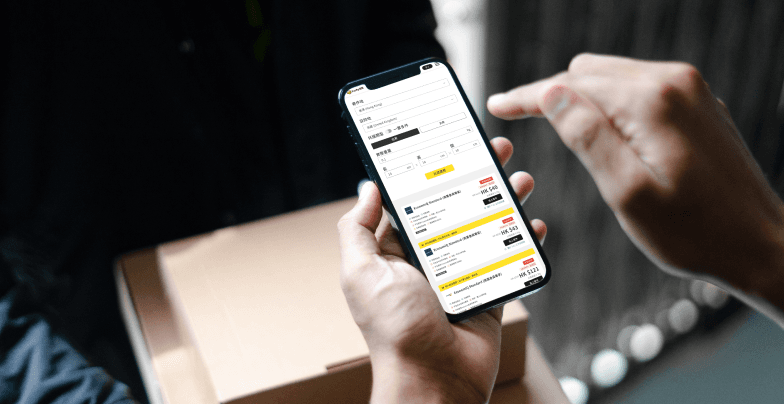
When dealing with large-scale domestic or international shipments, have you ever been frustrated by tedious quotation processes, non-transparent fees, and the risk of cargo damage? Shipping on pallets is a standard practice in commercial logistics, but the details involved—from selecting the right pallet size and calculating volumetric weight to handling customs documents—often consume a significant amount of a company's time and energy. The Fuuffy international courier comparison platform was created to solve these exact pain points. We integrate top-tier global logistics providers to offer a one-stop instant quotation and booking service. By simply entering您的 basic shipment details, you can compare the costs and transit times of various pallet shipping solutions in seconds, easily finding the most cost-effective option to get your goods delivered safely, on time, and on budget.
A pallet is a flat transport structure, typically made of wood, plastic, or metal, that supports goods in a stable fashion while being lifted by a forklift, pallet jack, or other jacking device. It is an indispensable foundation of the modern supply chain. Its core value lies in 'standardization.' By consolidating loose items into a single, standard-sized unit, pallets enable mechanical equipment like forklifts to perform loading and unloading with high efficiency, drastically reducing waiting times for trucks or containers. For businesses, using pallets is not just about convenience; it's a critical strategy for controlling costs and ensuring cargo safety. Data shows that compared to manually handling loose cargo, palletized shipping can increase loading/unloading efficiency by over ten times and reduce the rate of in-transit damage by at least 30%. Imagine a Hong Kong electronics company exporting a batch of precision instruments worth HKD 500,000 to Germany. If shipped as loose cargo, the goods are highly susceptible to damage from collisions and compression during multiple transfers and manual handling, potentially resulting in damage costs of tens of thousands of dollars for a single shipment. However, by properly stacking and securing the goods on a pallet, the entire unit is uniformly protected, maintaining stability from the Hong Kong warehouse to the German customer's doorstep, significantly lowering operational risks and extra costs. Therefore, whether for improving efficiency, reducing losses, or meeting international trade standards, pallets are the optimal choice for bulk shipments. Get an instant quote with Fuuffy now to save time and money!
Choosing the correct pallet is the first step to a successful shipment; a wrong choice can lead to extra charges, customs delays, or even damaged goods. The selection of a pallet primarily depends on three factors: size, material, and the regulations of the destination country. The most common materials include wood, plastic, metal, and paper. Wooden pallets are the market mainstream due to their low cost and high load-bearing capacity, but for export to most countries, they must be heat-treated or fumigated and stamped with an ISPM 15 certification mark to prevent the spread of pests. Plastic pallets are more durable, waterproof, and hygienic, and are exempt from fumigation, making them ideal for industries with high cleanliness standards like food and pharmaceuticals, though their upfront cost is higher. Understanding these differences helps you find the best balance between cost and compliance. For instance, a local food processing plant exporting frozen dim sum to Australia would choose plastic pallets to bypass fumigation, simplifying customs and ensuring food safety. In contrast, a furniture manufacturer shipping wooden furniture to the US could opt for IS-PM 15 treated wooden pallets to meet transport needs at the lowest cost. On the Fuuffy platform, our logistics experts and partners can provide professional advice based on your cargo's nature and destination, ensuring you make the right choice from the start. Get an instant quote with Fuuffy now to save time and money!
The standardization of pallet sizes is the cornerstone of efficient global logistics, but different regions adopt different mainstream standards. The three most common international standard sizes include: the EUR/EPAL Pallet (1200 x 800 mm), widely used across Europe; the Standard US Pallet (1219 x 1016 mm or 48 x 40 inches), the standard in the North American market; and the Australian Standard Pallet (1165 x 1165 mm), specifically designed to fit Australia's railway freight cars. It is crucial to select a pallet size compatible with the destination warehouse's racking system to avoid incurring extra 'repalletizing' fees upon arrival. For example, shipping a load on a US-standard pallet to Germany could result in manual handling fees of HKD 150 - 250 per pallet because it cannot be directly stored on Euro-standard racks. Fuuffy's intelligent quotation system will remind you to pay attention to destination specifications, helping you avoid such unnecessary expenses.
When choosing a pallet material, you must consider a combination of cost, cargo characteristics, and international quarantine regulations. Wooden pallets are the most popular due to their cost-effectiveness (approx. HKD 80-120 each) and strength. However, their biggest constraint is the ISPM 15 guideline from the International Plant Protection Convention (IPPC), which requires them to be heat-treated or fumigated and stamped with a certification mark before export. Failure to comply can result in the shipment being detained or destroyed at the destination. Plastic pallets, while more expensive (approx. HKD 250-400 each), offer advantages like being waterproof, moisture-resistant, and easy to clean. They are also exempt from ISPM 15 regulations, making them the ideal choice for shipping pharmaceuticals, food, or for operations in high-humidity environments. Fuuffy's partners can provide all types of pallets that meet international standards and can recommend the most cost-effective material solution for your cargo and route, ensuring your shipment proceeds smoothly.
The cost of shipping a pallet is not determined by weight alone but is calculated based on a combination of complex factors. These primarily include the chargeable weight, shipping distance and destination, and the chosen mode of transport (air or sea freight). Understanding how these factors interact is key to effectively controlling logistics costs. The chargeable weight is the greater of the pallet's actual weight and its volumetric weight. This is a standard industry practice to fairly account for the transport space occupied by light, bulky goods (like cotton) versus heavy, dense goods (like metal parts). Additionally, factors such as delivery to remote areas, special handling requirements (e.g., temperature control, hazardous materials), fuel surcharges, and peak season surcharges will all affect the final quote. Traditionally, obtaining an accurate pallet quote often requires contacting multiple companies individually, a process that can take 1-2 business days. The Fuuffy platform completely changes this model. You simply input your cargo's dimensions, weight, and destination, and our system calculates the all-inclusive costs from multiple top-tier logistics companies in under 30 seconds, allowing you to compare options at a glance and easily lock in the best price. Get an instant quote with Fuuffy now to save time and money!
In the freight industry, 'chargeable weight' is a core concept. Logistics companies calculate two values: your shipment's 'gross weight' (the weight on a scale) and its 'volumetric weight,' which measures the value of the space it occupies. The standard formula for volumetric weight is: Length(cm) x Width(cm) x Height(cm) / 5000. The freight cost is then based on the greater of these two weights. For example, you need to ship a pallet with dimensions 120cm x 100cm x 150cm. If it's loaded with metal parts and has an actual weight of 800 kg, its volumetric weight is (120x100x150)/5000 = 360 kg. Since the actual weight is greater, the shipping cost will be based on 800 kg. Conversely, if the pallet is loaded with lightweight styrofoam and weighs only 80 kg, the cost will be based on the volumetric weight of 360 kg. On the Fuuffy platform, you don't need to do manual calculations. Simply enter the pallet's dimensions and actual weight, and our system will automatically calculate the chargeable weight and the corresponding precise quote for each courier.
The mode of transport is the primary determinant of pallet shipping cost and transit time. Air freight is the fastest option, ideal for high-value or time-sensitive goods, with transit from Hong Kong to major European or American cities typically taking only 3-7 days. However, it is also the most expensive, with per-kilogram costs potentially ranging from HKD 40-70. In contrast, sea freight offers a significant cost advantage, especially for large-volume, less time-sensitive shipments. For the same route, the per-kilogram cost can be as low as HKD 5-12. The trade-off is a longer transit time, generally 25-40 days to Europe or the US. Businesses must make a choice based on their inventory cycles, customer demands, and budget. Fuuffy's unique feature is that you can instantly compare quotes for both air and sea freight on the same interface. For example, the system will clearly show that sending a 500 kg pallet to the UK costs approximately HKD 25,000 by air (5-day delivery) versus approximately HKD 4,500 by sea (30-day delivery), allowing you to make the smartest business decision based on real-time data.
Table Introduction: To give you a more intuitive understanding of the costs and estimated transit times for different destinations and shipping methods, we have compiled the following reference table for pallet shipments originating from Hong Kong to several popular business destinations. Please note that these figures are estimates; actual costs will fluctuate based on real-time fuel surcharges, cargo type, and market demand. Through the Fuuffy platform, you can obtain the most accurate quotes based on current market conditions.
| Destination | Shipping Method | Estimated Cost (per kg) | Estimated Transit Time |
|---|---|---|---|
| UK (London) | Air Freight | HKD 45 – 65 | 3 – 5 Business Days |
| UK (London) | Sea Freight | HKD 6 – 10 | 28 – 35 Days |
| USA (Los Angeles) | Air Freight | HKD 50 – 70 | 4 – 6 Business Days |
| USA (Los Angeles) | Sea Freight | HKD 5 – 9 | 20 – 28 Days |
| Australia (Sydney) | Air Freight | HKD 40 – 60 | 3 – 5 Business Days |
| Australia (Sydney) | Sea Freight | HKD 4 – 8 | 15 – 22 Days |
| Taiwan (Taipei) | Air Freight | HKD 25 – 40 | 1 – 2 Business Days |
| Taiwan (Taipei) | Sea Freight | HKD 3 – 6 | 3 – 5 Days |
Table Conclusion: The table clearly illustrates the significant differences in cost and time between air and sea freight. For urgent restocking or high-value electronics, choosing air freight is a wise move to secure business opportunities. For routine inventory replenishment or cost-sensitive goods, sea freight can substantially reduce logistics expenses. The value of the Fuuffy platform is that it not only presents these options but also allows you to compare specific quotes from multiple service providers on the same route with a single click, helping you uncover hidden deals and make the most optimized logistics decisions.
Professional pallet packing is the final and most crucial line of defense in ensuring your goods arrive intact after a long journey. Improper packing can easily lead to shifting or collapse of cargo during transit, causing irreversible losses. According to industry statistics, over 15% of cargo damage is due to improper packaging. By following these five key steps, you can reduce the risk of damage to below 0.5%. Step one: Choose a sturdy, flat pallet with no damage as your base. Step two: Stack goods in an 'interlocking' or 'brick' pattern to ensure layers lock together, increasing overall stability, and make sure the edges of the goods do not overhang the pallet. Step three: Place corner protectors on the top and four corners of the load to prevent strapping or shrink wrap from damaging the cartons when tightened. Step four: Use industrial-grade stretch wrap, starting from the base of the pallet, and tightly wrap the entire load from bottom to top with at least 50% overlap for at least 3-5 layers, finally binding the goods to the pallet itself. Step five: Clearly affix shipping labels with recipient, sender, and destination address information on at least two sides of the pallet. Fuuffy's logistics partners have strict packaging requirements; adhering to these standards is not only for cargo safety but also a necessity for smooth scanning and sorting at logistics hubs. Get an instant quote with Fuuffy now to save time and money!
Chart Introduction: The line between correct and incorrect packing methods is often thin, but the results can be worlds apart. To help you visualize the key differences, we've created a comparison chart showing professional packing versus common mistakes. The 'Incorrect Example' on the left shows issues like cargo overhanging the pallet edges, pyramid-style stacking, and loose shrink wrap—all common causes of shipping failures. The 'Correct Example' on the right demonstrates standard operating procedures like vertical alignment, the use of corner protectors, and tight wrapping.
[Chart Placeholder: A side-by-side comparison image. The left side, labeled 'Incorrect Example,' shows a pallet with overhanging cargo and pyramid stacking. The right side, labeled 'Correct Example,' shows a pallet with flat, vertically stacked goods, corner protectors, and tight stretch wrap.]
Chart Conclusion: This comparison visually reveals the devil in the details of packaging. A seemingly minor overhang can cause the entire pallet to lose balance and topple during forklift operation. Pyramid-style stacking fails to provide effective support for the upper layers, making them highly susceptible to collapse during transit. The Fuuffy platform does more than just provide quotes; we are committed to empowering our users with professional knowledge like this, helping you mitigate risks from the source and ensure every shipment is completed safely and smoothly, making every dollar you spend on shipping worthwhile.
Say goodbye to the hassle and waiting of traditional logistics quoting. Fuuffy streamlines the pallet shipping process to the extreme, offering you unprecedented efficiency and transparency. In the past, you might have spent one to two business days contacting multiple logistics companies by phone or email, repeatedly providing cargo information, and then waiting for their individual quotes. Now, with Fuuffy, the entire process is condensed into just a few minutes and three simple steps. Step one: Enter your shipping requirements. Simply fill in the pickup and destination locations, the number of pallets, their dimensions (length, width, height), and the estimated total weight on our clear web interface. Step two: Compare quotes instantly. After clicking 'Search,' our intelligent system immediately connects to our global partners' databases and presents a detailed comparison list within 30 seconds. You can see key information like shipping costs, estimated transit times, and service ratings from different companies, with all fee details clearly laid out and absolutely no hidden charges. Step three: Book and pay online. Once you've selected your preferred option, you can complete the booking directly online, securely pay the shipping fee, and download and print the shipping labels. The entire process is seamless, from quotation to booking, all handled online, saving you valuable time and administrative costs so you can focus more on growing your core business. Get an instant quote with Fuuffy now to save time and money!
In summary, pallet shipping is an indispensable part of modern commercial logistics, but its complex pricing mechanisms, strict packaging requirements, and cumbersome international regulations often become a significant burden for businesses. From choosing the right pallet size and material to accurately calculating chargeable weight and ensuring secure, compliant packaging, every step is fraught with challenges. The core value of the Fuuffy international courier comparison platform is to simplify all this complexity. We leverage technology to provide you with a transparent, efficient, and highly cost-effective solution. Stop worrying about the hassles of pallet shipping. Visit Fuuffy today for a free, instant quote, and let your goods be transported to destinations around the world with unprecedented ease, security, and affordability!
Share


About Fuuffy
Fuuffy is an international express delivery pricing and reservation platform. With just one account, you can compare shipping costs from 16 international express companies (UPS, DHL, FedEx, etc.) and enjoy exclusive discounts of up to 70%, significantly saving shipping costs. Fuuffy also provides door-to-door pickup service, allowing you to complete the entire electronic customs declaration and shipping process in about 5 minutes at home or office. Fuuffy can be delivered to 180 countries and regions around the world within 3 working days at the fastest, providing you with the fastest and smoothest express delivery service!
Send parcels overseas from Hong Kong
How to avoid tariffs?
The tax exemption amounts vary from country to country. As long as you master the secret and keep the value of your items within the designated tax-free amount, you can easily save on customs duties. Fuuffy has compiled tax-free strategies for popular shipping routes to teach you how to save more money!