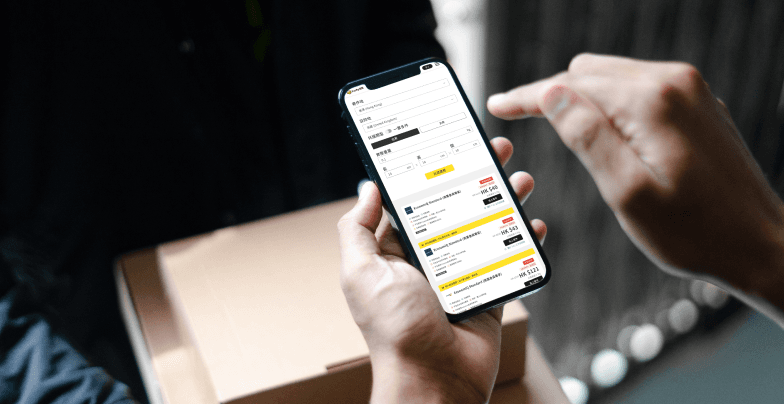
Feeling overwhelmed by the complex fees and cumbersome processes of LCL (Less than Container Load) shipping? As an SME or e-commerce seller, are you still spending days waiting for manual quotes from traditional forwarders, worried about hidden charges? The Fuuffy international courier comparison platform is revolutionizing the LCL shipping game. We consolidate top-tier global logistics providers to offer instant, transparent LCL quote comparisons. Simply enter your shipment details, and within 30 seconds, you'll receive multiple sea freight options with all costs clearly itemized. This helps you easily manage your logistics budget and focus your valuable time on business growth. Say goodbye to complexity and hello to efficiency—Fuuffy is your ultimate LCL shipping partner.
LCL, or Less than Container Load, is a sea freight service designed for shippers whose cargo volume is not large enough to fill a full container (FCL - Full Container Load). Its core principle is a 'sharing economy' concept: a logistics company (freight forwarder or consolidator) gathers cargo from multiple different shippers, all heading to the same destination port, and consolidates them into a single container. Once the container arrives at the destination port, a local agent deconsolidates (unstuffs) it and distributes the individual shipments to their respective consignees based on their bills of lading. This process is known as Consolidation and Deconsolidation. For SMEs, e-commerce sellers, or companies new to international trade, LCL offers immense flexibility and cost-effectiveness. You don't pay for unused container space; instead, you only pay for your cargo's actual volume (in CBM - Cubic Meters) or weight, significantly lowering the barrier to international logistics. For instance, a boutique fashion store in Hong Kong needs to import 5 cartons of the latest season's apparel from Italy, with a total volume of just 2 CBM. Opting for FCL would mean paying for an entire 20-foot container (approx. 28 CBM), which is highly uneconomical. With LCL, they only pay for 2 CBM, sharing the container space and cutting costs by over 80%. This not only saves money but also improves cash flow, allowing the business to test new markets or manage smaller inventory batches with lower risk. The Fuuffy platform simplifies this process even further, allowing you to instantly compare LCL options from various providers to find the perfect match for your volume and budget. Get an instant quote on Fuuffy now to save time and money!
The cost structure of LCL is relatively more complex than FCL's, and understanding its components is key to effective budget control. Many shippers are often lured by low 'ocean freight' rates, only to overlook the local charges at the origin and destination ports, resulting in a final cost far exceeding their expectations. LCL fees are primarily composed of three parts: Ocean Freight, Origin Charges, and Destination Charges. To master your budget, you must have a clear understanding of each charge.
LCL freight is typically charged based on the 'W/M' (Weight/Measurement) principle, which means the carrier compares the cargo's actual weight (in tons) to its volume (in CBM) and bills based on whichever is greater. As a rule of thumb, 1 CBM is equated to 1000 kg. For example, if your cargo has a volume of 2 CBM and an actual weight of 1500 kg (1.5 tons), the freight will be calculated based on 2 CBM since the volume (2) is greater than the weight (1.5). Conversely, if the cargo consists of heavy metal parts with a volume of only 1 CBM but a weight of 2500 kg (2.5 tons), the freight will be based on 2.5 tons. The Fuuffy platform features a smart calculator; you just need to enter your cargo's length, width, height, and weight, and the system will automatically determine the chargeable unit and display an accurate quote instantly, eliminating the hassle and potential errors of manual calculation.
In addition to ocean freight, a series of local charges are incurred at both the origin and destination ports. For exports from Hong Kong, common local charges include: Container Freight Station (CFS) Fee, around HKD 120–180/CBM; Terminal Handling Charge (THC), which is prorated; Documentation Fee, around HKD 400–600 per shipment; and customs declaration fees. These can add up to a significant amount. The biggest pitfall often lies in the destination charges. Under DDU (Delivered Duty Unpaid) terms, the consignee is responsible for often-high deconsolidation fees, port surcharges, and customs clearance fees, which are frequently obscured in the initial quote. Fuuffy is committed to transparent pricing, clearly listing all foreseeable cost items so you have a complete picture of the total cost before you ship, effectively avoiding any 'arrival surprises'.
The table below clearly compares the experience of getting an LCL quote through the Fuuffy platform versus a traditional freight forwarder. The traditional model involves a slow quoting process and often lacks transparency in fee details, especially concerning destination charges, which can lead to budget overruns. In contrast, Fuuffy leverages technology to provide instant, comprehensive, and transparent quotes. All potential costs, from local origin charges to ocean freight, are clearly listed, enabling users to fully grasp the total cost before booking, make the most informed decision, and eliminate the risk of hidden fees.
| Item | Fuuffy Platform | Traditional Freight Forwarder |
|---|---|---|
| Quotation Speed | Instant generation within 30 seconds | 1-3 business days for manual reply |
| Cost Transparency | Very high, all fees itemized | Moderate, potential for unlisted destination charges |
| Price Competitiveness | Aggregates multiple suppliers for the best market rates | Single quote, lacks comparison |
| Operational Convenience | 24/7 online self-service | Requires email/phone communication, limited by office hours |
| Tracking & Management | Real-time online cargo tracking | Requires manual inquiry for updates |
In conclusion, choosing a transparent and reliable platform is crucial for controlling LCL costs. Fuuffy not only provides instant quotes but, more importantly, offers clarity in its pricing structure, allowing you to easily compare the Total Cost of Ownership across different solutions. This digital approach, compared to the traditional model reliant on sales personnel, more effectively helps SMEs mitigate risks and achieve precise logistics budget management. Get an instant quote on Fuuffy now to save time and money!
While the LCL export process involves multiple stages, mastering the core steps can make it manageable. Traditionally, shippers had to engage in extensive back-and-forth communication with freight forwarders and handle tedious paperwork. However, with digital platforms like Fuuffy, the entire process has become unprecedentedly intuitive and efficient. From getting a quote to your cargo's arrival, you can manage everything online with ease. Here, we simplify the LCL export process into five key steps to give you a clear understanding of the entire shipping journey. Whether you're a novice or an experienced shipper, you can get started quickly.
Before initiating any shipment, the first task is to ensure your goods are properly packed for long-haul sea transport. Use sturdy cartons or wooden crates and apply clear Shipping Marks, indicating consignee information, carton numbers, etc. Simultaneously, prepare two core documents: the Commercial Invoice, which details the product description, quantity, unit price, and total value; and the Packing List, which specifies the contents, gross weight, net weight, and dimensions of each package. These documents are essential for export declaration and destination customs clearance. Accurate information ensures a smooth process.
The traditional way of finding LCL services involves calling or emailing multiple forwarders, which is time-consuming. Now, you can simply log in to the Fuuffy platform and enter your cargo's origin, destination, volume, and weight. Within 30 seconds, our system will instantly match your needs with multiple LCL shipping solutions from our extensive network of logistics providers. Each option clearly lists the freight cost, estimated sailing schedule, transit time, and a detailed breakdown of fees. You can easily compare and select the most cost-effective option, then book online with one click. The entire process might take only 5 minutes.
After booking, you will receive a Shipping Order (SO) from the freight forwarder, which specifies the designated Container Freight Station (CFS) address and closing time. You need to arrange for a truck to deliver your cargo to this warehouse before the specified deadline. The warehouse staff will verify the cargo against the SO, inspect it, weigh it, and measure its dimensions. Then, your goods will be professionally loaded into the designated container along with cargo from other customers, completing the 'consolidation' process.
Once the cargo is consolidated in the container, the freight forwarder will use your provided Commercial Invoice and Packing List to handle the export customs declaration in Hong Kong. After clearance, the container will be transported to the terminal and loaded onto the designated vessel. After the ship departs, you will receive a Bill of Lading (B/L), which is the proof of title to the goods and the key document for cargo pickup at the destination. On the Fuuffy platform, you can track the container's movements in real-time, staying updated on your cargo's location and estimated time of arrival.
The entire LCL process may seem complex, but it can be significantly simplified through the Fuuffy platform. The flowchart below illustrates the complete path from preparing your goods to the consignee's successful pickup. Fuuffy provides unparalleled efficiency in the initial but most critical steps of 'Get Quote' and 'Book Shipment', reducing what used to take days to just a few minutes. Furthermore, the platform-based management centralizes and makes transparent the subsequent document handling and cargo tracking, keeping you informed at every stage.

This flowchart clearly illustrates every step of the LCL journey. Fuuffy's value lies in digitizing and automating the tedious initial steps of price comparison and booking, allowing users to focus on the core tasks of cargo preparation and documentation. Once the goods are handed over to our logistics partners, status updates for every node—from consolidation and customs clearance to sea transit—are synchronized to your Fuuffy account, achieving true one-stop, transparent management. This not only boosts efficiency but also significantly reduces communication costs and potential risks arising from information asymmetry. Get an instant quote on Fuuffy now to save time and money!
In the world of sea freight, LCL (Less than Container Load) and FCL (Full Container Load) are the two fundamental choices, but they cater to vastly different business needs. Making the right choice directly impacts your logistics costs, time efficiency, and inventory management. FCL means you book an entire container (usually 20-foot or 40-foot) for your cargo, regardless of whether you fill it. LCL, on the other hand, means sharing container space with others. For SMEs with fluctuating or small single shipment volumes, understanding the core differences and making a wise decision based on their situation is crucial. This is not just about choosing a shipping method; it's part of a company's logistics strategy. Generally, the choice hinges on a trade-off between four dimensions: cargo volume, cost, time sensitivity, and cargo security. For example, while FCL has a lower per-unit (per CBM) cost, its total cost threshold is high. In contrast, LCL's per-unit cost is higher, but its total expenditure is more flexible, making it ideal for small-batch, frequent shipments. The Fuuffy platform provides instant quotes for both LCL and FCL, allowing you to easily compare the total cost of both options based on real data to make the most advantageous business decision. Get an instant quote on Fuuffy now to save time and money!
The most direct criterion is your cargo volume. The general market consensus is that when your cargo volume is less than 13-15 CBM, choosing LCL is usually more cost-effective. This is because you only pay for the space you use. However, once your volume exceeds this threshold, the total cost of LCL (due to its higher per-CBM price and various surcharges) may approach or even exceed the cost of booking a 20-foot FCL container (with about 28 CBM of usable space). In this case, even if your cargo cannot completely fill it, choosing FCL might be more economical. Fuuffy's quoting system helps you easily calculate this 'break-even point'. Simply enter your cargo details, and the system will display both LCL and FCL options with their total prices, making the choice clear at a glance.
FCL is generally faster than LCL. This is because FCL skips the time-consuming consolidation at the origin port and deconsolidation at the destination port. The container can go directly from your factory to the terminal and can be picked up for clearance immediately upon arrival, potentially shortening the overall transit time by 3 to 7 days. Additionally, since the container is sealed from start to finish and only handles your goods, the risk of damage or loss during transit is relatively low. In contrast, LCL cargo undergoes multiple handlings and shares a container with other goods, carrying a slightly higher risk. However, LCL offers unparalleled flexibility. You don't have to wait to accumulate enough goods for a full container; you can arrange small-batch shipments at any time based on order demand, which helps maintain low inventory and healthy cash flow.
LCL transit time is typically 4-10 days longer than FCL. This is mainly due to the extra time required for cargo consolidation at the port of origin and deconsolidation and sorting at the destination port. The specific transit time depends on the shipping route. For example, an LCL shipment from Hong Kong to the UK might have a sea transit time of about 30 days, but with the handling time at both ends, the total duration could be around 40 days. The Fuuffy platform provides an estimated total transit time to help you plan your supply chain better.
Professional logistics providers take strict measures to ensure the safety of LCL cargo. Goods are properly loaded and secured at the CFS warehouse to prevent movement and damage during sea transit. However, as it involves multiple handlings, a risk always exists. Therefore, it is highly recommended to purchase appropriate cargo insurance and ensure your goods are sturdily packed to withstand multiple loadings and unloadings. Fuuffy partners with reputable logistics service providers to maximize the safety of your cargo.
CBM stands for Cubic Meter and is the standard unit for calculating the volume of sea freight cargo. The formula is simple: Length (in meters) x Width (in meters) x Height (in meters) = CBM. For example, if your carton's dimensions are 1.2m long, 0.8m wide, and 0.9m high, its volume is 1.2 x 0.8 x 0.9 = 0.864 CBM. If you have multiple cartons, simply add up the CBM of each one. The Fuuffy platform's quotation system will automatically calculate this for you; you just need to enter the dimensions.
A complete LCL door-to-port quote should at least include: Ocean Freight, origin local charges (such as CFS, THC, documentation fee, customs declaration fee), and possible fuel surcharges. Pay special attention to whether the quote includes destination port charges. Fuuffy is committed to providing fully transparent quotes, clearly listing all known cost items to prevent you from encountering unexpected fees at the destination, thus ensuring your budget is protected.
In summary, LCL shipping offers SMEs and e-commerce sellers a highly cost-effective and flexible solution for international logistics. It breaks the barrier of having to ship a full container, making small-batch, multi-frequency global trade accessible. However, to truly leverage the advantages of LCL, the key is to choose a partner that provides transparent pricing, streamlined processes, and integrated quality resources. The Fuuffy platform was created for this very purpose. We use technology to make the traditionally cumbersome LCL quoting and booking process as simple and fast as online shopping. With just a few clicks, you can get clear, comprehensive quotes, completely eliminating hidden fees and long waits. Don't let complex logistics hinder your business growth. Experience the power of Fuuffy today, get your instant LCL quote, and let us help you ship your products to every corner of the world with ease!
Share


About Fuuffy
Fuuffy is an international express delivery pricing and reservation platform. With just one account, you can compare shipping costs from 16 international express companies (UPS, DHL, FedEx, etc.) and enjoy exclusive discounts of up to 70%, significantly saving shipping costs. Fuuffy also provides door-to-door pickup service, allowing you to complete the entire electronic customs declaration and shipping process in about 5 minutes at home or office. Fuuffy can be delivered to 180 countries and regions around the world within 3 working days at the fastest, providing you with the fastest and smoothest express delivery service!
Send parcels overseas from Hong Kong
How to avoid tariffs?
The tax exemption amounts vary from country to country. As long as you master the secret and keep the value of your items within the designated tax-free amount, you can easily save on customs duties. Fuuffy has compiled tax-free strategies for popular shipping routes to teach you how to save more money!