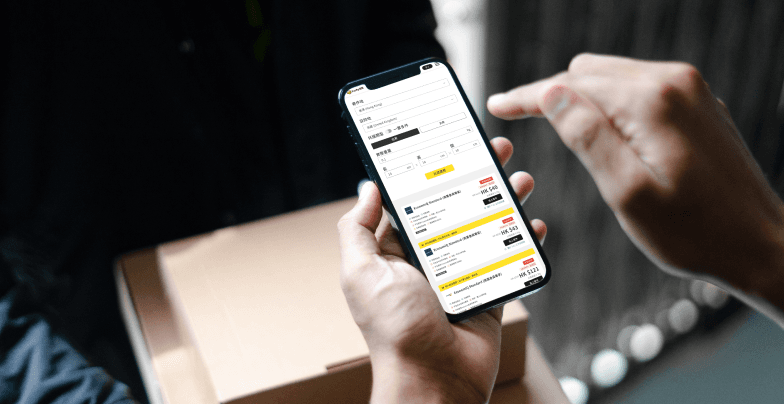
Thinking of buying your favorite items from Japan online, but feeling overwhelmed by the complex Japanese consumption tax and high shipping fees? Whether you're planning to shop on Rakuten, Amazon JP, or hunt for limited-edition anime merchandise, tax issues often deter many Hong Kong buyers. This ultimate guide will thoroughly break down all aspects of Japan's consumption tax for you, covering direct shipping from online stores, consolidation services, and tax refund procedures. We'll teach you how to calculate costs smartly and avoid unnecessary expenses. More importantly, we'll reveal how to use the Fuuffy international courier comparison platform to achieve shipping savings that far exceed the cost of the consumption tax, helping you reach your true 'money-saving' goal!
To be a smart shopper in Japan, you must first understand the core concept of the 'Japanese Consumption Tax.' Currently, the standard consumption tax rate in Japan is 10%, applicable to most goods and services. For Hong Kong buyers, this 10% tax often raises many questions, especially when it involves online shopping, proxy buying, and package forwarding services. The biggest myth is: 'I'm not a Japanese citizen and I'm just shipping goods to Hong Kong, why do I have to pay Japanese tax?' The answer to this question depends on your 'shipping address.' If the goods are shipped directly from a Japanese online store to a Hong Kong address, many large e-commerce platforms (like Amazon JP) will treat it as an 'export' and automatically waive the 10% consumption tax at checkout. However, if you use a package forwarding service, your shipping address is the forwarder's warehouse in Japan. From a Japanese legal perspective, this is a complete 'domestic transaction,' so the merchant is legally required to collect the 10% consumption tax. This is why many people find that the price of goods is higher when using a forwarding service compared to direct shipping. For example, you see a jacket priced at ¥50,000 on a Japanese website. If the site supports direct shipping to Hong Kong and waives the tax, you only pay ¥50,000 plus international shipping. But if the site only supports domestic delivery in Japan and you opt for a forwarding service, your checkout amount will be ¥55,000 (¥50,000 + 10% tax), and then you ship the package from the forwarding warehouse to Hong Kong. Although you pay the tax, the advantage of forwarding is the ability to consolidate multiple packages, significantly reducing expensive international shipping costs, often making the total cost more economical. The key is to minimize the shipping cost, which is precisely where Fuuffy's value lies. Get an instant quote with Fuuffy now to save time and money!
When shopping from Japan, Hong Kong buyers typically have two main options: have the online store ship directly to Hong Kong, or use a package forwarding service to consolidate packages before shipping. These two methods have significant differences in tax treatment and overall cost, and understanding their operational models is key to making the most economical decision. The advantage of direct shipping is its simplicity and the frequent benefit of being exempt from the 10% consumption tax. However, the downside is limited and expensive shipping options, especially when shopping from a single store. In contrast, while package forwarding requires paying the Japanese domestic consumption tax, it allows you to shop from multiple different online stores and combine all items into one large package for shipment to Hong Kong. This 'consolidate and conquer' approach can dramatically reduce the per-unit weight cost of international shipping, leading to astonishing savings on transport. When you are buying a wide variety of items from different platforms, the cost advantage of package forwarding becomes crystal clear. Overall, you need to weigh the trade-off between the 'waived tax' and the 'saved shipping fees.' For a single, high-value item, direct shipping might have a slight edge. But for the vast majority of avid Japanophiles, using a forwarding service combined with Fuuffy's freight comparison feature is the golden rule for minimizing total costs. Get an instant quote with Fuuffy now to save time and money!
When you choose to have a Japanese online store ship your items directly to Hong Kong, the biggest benefit is often the tax convenience. Many large e-commerce platforms catering to the international market, such as Amazon Japan and some stores on Rakuten Global Market, have highly intelligent checkout systems. When you enter a Hong Kong address in the shipping field, the system automatically recognizes the order as an 'export.' According to Japanese tax law, exported goods are exempt from domestic consumption tax. As a result, you'll notice on the final payment page that the 10% consumption tax is automatically deducted from the product price. For instance, a model figure listed with a tax-included price (税込) of ¥22,000 might revert to its tax-excluded price (税抜) of ¥20,000 after you confirm shipping to Hong Kong. While this method seems to directly save on tax, you must also bear the international shipping fee designated by the store, which usually offers little choice and can be as high as ¥4,000 to ¥8,000, calculated independently by each store and unable to be combined. Therefore, the direct shipping model is most suitable for purchasing single, very high-value items where the store offers a reasonable international shipping rate.
Package forwarding services were created to solve pain points like 'the store doesn't ship internationally' or 'high shipping costs for multi-store shopping.' The logic is simple: when you shop, you use the forwarding company's Japanese warehouse address as your shipping address. Since this is a domestic Japanese address, from the merchant's perspective, it's a standard domestic sale, and they are legally required to charge the 10% consumption tax. Continuing the previous example, for that ¥20,000 model figure, you would need to pay ¥22,000 when using a forwarding service. This tax amount is non-refundable. However, the true power of forwarding lies in 'saving on shipping.' Imagine you buy the model from store A (¥22,000), clothes from store B (¥11,000), and cosmetics from store C (¥5,500). If shipped directly and separately, you might have to pay three expensive international shipping fees. But with a forwarding service, you can have these three packages consolidated into one at the warehouse, paying only a single, combined international shipping fee. With the Fuuffy comparison platform, you can instantly compare quotes from various couriers for your consolidated package, easily finding the cheapest option. The savings on shipping often far outweigh the 10% consumption tax you paid, which is the winning strategy for smart buyers.
To more intuitively demonstrate the cost difference between direct online store shipping and using a package forwarding service, we've simulated a common shopping scenario: purchasing goods worth a total of ¥50,000 (pre-tax) from three different Japanese online stores. Many consumers might intuitively assume that the direct shipping model, which often waives the 10% consumption tax, must be more cost-effective. However, the variable of international shipping fees is often the key determinant of the total cost. The table below clearly quantifies the various expenses under both models, helping you understand which option is truly the money-saver in different situations. Please note that shipping costs are estimates and actual fees will vary based on package weight, volume, and the chosen courier.
| Item | Direct Shipping to HK (3 separate orders) | Package Forwarding (Compared via Fuuffy) |
|---|---|---|
| Total Goods Value (Pre-tax) | ¥50,000 | ¥50,000 |
| Japan Consumption Tax (10%) | ¥0 (Usually waived) | ¥5,000 |
| Total Paid for Goods | ¥50,000 | ¥55,000 |
| International Shipping (Estimated) | ¥12,000 (¥4,000 x 3) | ¥4,500 (Consolidated) |
| Total Cost (JPY) | ¥62,000 | ¥59,500 |
| Total Cost (HKD, at 0.052 exchange rate) | HKD 3,224 | HKD 3,094 |
As the data analysis from the table above shows, although the package forwarding model requires paying ¥5,000 in consumption tax, the savings from consolidating packages on international shipping (¥7,500) far exceed the tax expense. Ultimately, using a package forwarding service and finding the best shipping rate through Fuuffy results in a total cost that is about HKD 130 cheaper than the direct shipping model. This example clearly demonstrates that for consumers shopping from multiple stores, instead of getting hung up on the 10% consumption tax, it's better to focus on how to maximize savings on shipping fees. The Fuuffy platform is designed precisely for this purpose, allowing you to easily compare and ensure every dollar is well spent.
When Japan's consumption tax is mentioned, many people immediately think of 'tax refunds.' However, the concept of a 'refund' has vastly different meanings in different contexts, especially for tourists versus online shoppers, where the rules and feasibility diverge greatly. Tourists shopping in physical stores in Japan can get their tax back before departure if they meet certain conditions, which is a relatively straightforward process. But for consumers in Hong Kong buying Japanese goods online, the situation is much more complex. Whether an online shopper can get a 'tax refund' depends entirely on the shopping process and shipping method. Confusing these two scenarios is the main source of bewilderment for many online consumers. This chapter will clearly distinguish between these two situations, providing a detailed breakdown of the standard tax refund process for tourists and revealing how online shoppers can achieve a 'de facto tax refund' under specific conditions. It will also explain how to shift strategy by saving on transport costs to achieve the ultimate goal of saving money when a refund isn't possible. Get an instant quote with Fuuffy now to save time and money!
If you are a tourist visiting Japan in person, enjoying tax-free shopping is a significant benefit. Japan's Tax-Free Shopping policy applies to foreign visitors holding a short-term tourist visa. To qualify for a tax refund, you need to spend a certain minimum amount on the same day at the same store that displays the 'Japan Tax-Free Shop' logo. The minimum spending threshold for both general goods (like electronics, clothing, handbags) and consumables (like cosmetics, food, medicine) is ¥5,000 before tax. When checking out, you must present your original passport to the staff. The store will then package the goods and prepare the tax refund documents. There are two main ways to get the refund: one is to pay the tax-excluded price directly at checkout; the other is to pay the full tax-included price first and then go to a designated tax refund counter within the store or mall to receive a cash refund. It is crucial to emphasize that this process is strictly limited to 'tourists who personally purchase goods within Japan and promise to take them out of Japan for use.' Therefore, this tax refund policy is completely inapplicable to any form of online shopping, especially when using a package forwarding service (where the shipping address is within Japan).
For online shoppers in Hong Kong, although you can't use the tourist tax refund process, there's still a chance to get a 'de facto tax refund.' This opportunity mainly exists with large online stores that offer international direct shipping. As mentioned earlier, when you shop on platforms like Amazon JP and choose to ship directly to Hong Kong, the system treats the transaction as an export and automatically waives the 10% consumption tax. In effect, this is equivalent to getting a tax refund. However, the vast majority of Japan's specialty boutiques, brand official websites, or second-hand platforms do not offer international shipping. To shop from these sites, your only option is to use a package forwarding service. In this case, paying the 10% consumption tax is unavoidable. At this point, a smart consumer should shift their mindset: since the tax is a fixed cost, the focus of saving should be on the variable 'shipping fee.' For an item worth ¥30,000, the consumption tax is a fixed ¥3,000. But its international shipping cost can vary between different courier companies by HKD 100 to HKD 200 (approx. ¥2,000 to ¥4,000). This means that by choosing the cheapest courier option on the Fuuffy platform, the money you save could easily cover or even exceed the tax you paid.
While agonizing over whether to pay the 10% consumption tax on Japanese online purchases, many buyers overlook a much larger cost variable: international shipping. The consumption tax is a fixed 10%, but the price difference for the same package among various courier services can be as high as 50% or more. This means the amount you save on shipping could very well exceed the tax you paid. The chart below clearly illustrates how much you can save on shipping by comparing and selecting the best price through the Fuuffy platform, compared to randomly choosing other standard courier services for packages of different weights. This saved amount is the real 'profit' from your Japanese online shopping.

The chart data is clear at a glance: whether it's a small 2kg package or a large 10kg box, the savings from price comparison on Fuuffy are substantial. For example, for a 5kg package, you can save up to HKD 200 on shipping. Assuming the total value of your purchased goods is HKD 2,000, the 10% consumption tax would be HKD 200. In this scenario, the savings on shipping alone have already completely offset the tax you paid. This powerfully demonstrates that for savvy online shoppers, instead of trying to evade a non-refundable tax, concentrating on using tools like Fuuffy to optimize shipping costs is the most practical and effective strategy for maximizing total savings.
When your haul from Japan is ready to be shipped from the consolidation warehouse to Hong Kong, a crucial step is filling out the 'customs declaration,' with the most critical item being the 'Declared Value.' This figure is not only the basis for customs to estimate the value of your package but also directly affects the smoothness of customs clearance. Many people are confused about this and might even consider 'under-declaring the value to avoid taxes,' which is an extremely dangerous and unnecessary misconception. Firstly, Hong Kong is a free port, and the vast majority of personal goods, such as clothing, electronics, books, and toys, are not subject to any import duties. Only four categories of dutiable commodities—liquor, tobacco, hydrocarbon oil, and methyl alcohol—are taxed. Therefore, for 99% of online shopping parcels from Japan, the issue of 'import duties' simply doesn't exist. Secondly, if you falsely declare or severely under-declare the value and are caught during a customs inspection, the consequences can include: the package being detained, a request for proof of transaction, fines, or even the package being destroyed or returned. The entire process is time-consuming and not worth the risk. So, how should the declared value be filled in? The most accurate practice is to declare the 'actual value' of the goods, which is the original price of the items, excluding Japanese domestic consumption tax and shipping fees. For example, if you bought an item for ¥22,000 (tax included) whose original price was ¥20,000, the declared value should be ¥20,000. The Fuuffy platform provides clear guidance during the ordering process, helping you to accurately fill in the customs information to ensure your package clears customs legally and quickly. Get an instant quote with Fuuffy now to save time and money!
In conclusion, to conquer the cost challenges of online shopping from Japan, the key is to have a holistic view. Instead of fixating on whether you can get a waiver for the fixed 10% Japanese consumption tax, it's far more effective to shift your focus to the more flexible and potentially high-saving international shipping fees. This article has clearly shown that in most cases, especially when shopping from multiple websites, using a package forwarding service and paying the consumption tax, then finding the best shipping solution through the Fuuffy international courier comparison platform, results in a much lower total cost than shipping items separately. The value Fuuffy provides is not just saving money, but also saving you precious time from comparing quotes and service terms of various couriers. We simplify complex logistics choices into a clear, transparent comparison interface, allowing you to make the smartest, most economical decision with just a few clicks. Stop worrying about complex taxes and high shipping fees. Try Fuuffy now and enjoy the smartest, most affordable Japan shipping experience!
Share


About Fuuffy
Fuuffy is an international express delivery pricing and reservation platform. With just one account, you can compare shipping costs from 16 international express companies (UPS, DHL, FedEx, etc.) and enjoy exclusive discounts of up to 70%, significantly saving shipping costs. Fuuffy also provides door-to-door pickup service, allowing you to complete the entire electronic customs declaration and shipping process in about 5 minutes at home or office. Fuuffy can be delivered to 180 countries and regions around the world within 3 working days at the fastest, providing you with the fastest and smoothest express delivery service!
Send parcels overseas from Hong Kong
How to avoid tariffs?
The tax exemption amounts vary from country to country. As long as you master the secret and keep the value of your items within the designated tax-free amount, you can easily save on customs duties. Fuuffy has compiled tax-free strategies for popular shipping routes to teach you how to save more money!