Are you preparing to export goods to Africa? Feeling overwhelmed by the tedious application process for the Cargo Tracking Note (CTN)? From understanding different national regulations and finding reliable agents to dealing with non-transparent fees, every step is a challenge. An incorrect application can lead not only to hefty fines but also to the severe consequence of being unable to clear customs at the destination port. Fuuffy, the international courier comparison platform, understands your predicament. Our one-stop solution allows you to instantly compare quotes from multiple CTN agents, simplifying complex procedures to ensure your shipments are smooth, on-time, and cost-effective.
A CTN, or Cargo Tracking Note, is a mandatory cargo supervision document required by several countries, primarily in Africa. It is not a traditional logistics tracking number but an official electronic manifest used to declare detailed cargo information to the destination's customs authorities before the shipment is loaded. The main purpose of this document is to strengthen the supervision, tracking, and control of imported goods, effectively preventing illegal activities such as misdeclaration or under-invoicing of cargo value. It also provides destination ports with advance cargo information, which helps improve customs clearance efficiency and port management. Depending on the country, a CTN may have different names, such as BESC (Bordereau Électronique de Suivi de Cargaison), ECTN (Electronic Cargo Tracking Note), or FERI (Fiche Électronique des Renseignements à l'Importation). Regardless of the name, its nature and function are the same: to act as an 'entry pass' for goods into the country. The absence of this critical document can lead to disastrous consequences. Firstly, your cargo will be unable to complete customs clearance at the destination port and will be detained by customs. This will be followed by exorbitant port storage fees, demurrage charges, and a massive fine far exceeding the normal application fee. In some extreme cases, the cargo may even be auctioned off by customs or returned to origin, causing incalculable financial and reputational damage to the exporter. For instance, a shipment of building materials to Angola, detained for failing to process a CNCA (Angola's name for the CTN), could incur daily container detention fees of several hundred dollars, with fines potentially reaching twice the cargo's value. Therefore, for any business planning to export to a country with a CTN system, applying for the CTN in advance and accurately is an absolute prerequisite for ensuring smooth trade and controlling logistics risks. Get an instant quote with Fuuffy now to save time and money!
Although the CTN application process may seem complex, it can be completed smoothly by mastering the core steps and avoiding common mistakes. The entire process can be summarized in four stages: document preparation, finding an agent, submission and review, and final validation. Each step is interlinked, and negligence at any stage can lead to delays and additional costs. The Fuuffy platform is dedicated to simplifying this process, allowing you to focus on your core business rather than tedious administrative work. Below, we break down each step in detail and highlight the 'pitfalls' you need to watch out for, helping you navigate the CTN application with ease.
This is the foundation of the entire CTN application. Incomplete documents or inconsistent data are the primary reasons for application rejection or delay. The core documents you typically need to prepare include: a confirmed Draft Bill of Lading, which must clearly state the vessel name, voyage number, container number, shipping marks, and cargo description; a Commercial Invoice, detailing buyer and seller information, cargo value, and trade terms; a Packing List, outlining the packaging details, gross weight, and net weight; and an Export Customs Declaration. Some countries may require additional documents, such as a Certificate of Origin or a cargo insurance policy. It is crucial to ensure that all information across these documents—especially the shipper, consignee, cargo description, and quantity—is perfectly consistent to avoid any discrepancies.
The CTN must be processed through an agency authorized by the destination country's authorities; exporters cannot apply directly to customs. There are many agents in the market with varying service quality and fee structures. The traditional method of contacting them one by one for quotes is time-consuming and inefficient. This is where Fuuffy plays a key role. Through our platform, you simply enter your shipment details to receive instant quotes from multiple certified agents at once, with a clear and understandable price structure. For example, for a 40-foot container from Hong Kong to the DR Congo, the service fee for a CTN (FERI) can range from HKD 2,000 to HKD 3,500 among different agents. Fuuffy allows you to compare easily and choose the most cost-effective service, avoiding hidden fees.
After selecting an agent, you will need to submit the prepared documents to them. The agent will create a CTN application draft based on your information and send it back for your confirmation. This is a critically important step. You must act like a detective, meticulously checking every word and figure on the draft to ensure it matches your original documents perfectly. Common pitfalls include spelling errors in the consignee's company name, inaccurate HS Code classification for the cargo, or incorrect container or seal numbers. Once the draft is confirmed and submitted, any subsequent amendments will usually incur a high modification fee (around HKD 500-800) and may even require a new application. Therefore, be extra cautious before confirming.
After you confirm the draft and pay the relevant fees, the agent will submit the application to the official system for final approval. Once approved, you will receive a formal electronic certificate with a unique CTN number and barcode. This CTN number must be provided to the shipping line before the vessel's arrival to be updated on the final Bill of Lading. You also need to send this validated CTN certificate to the consignee at the destination port for their local customs clearance procedures. Only then is the entire application process complete. Be sure to keep this document safe, as it is the key proof of your cargo's legal importation. Get an instant quote with Fuuffy now to save time and money!
The table below provides estimated fees and processing times for CTN applications for several popular African trade destinations. Please note that these figures are for reference only; actual costs will vary depending on container type (20GP, 40GP, 40HC), cargo type, agent service fees, and currency exchange rate fluctuations. The traditional method of inquiring for quotes is often time-consuming and makes it difficult to secure the most competitive price. The core advantage of the Fuuffy platform is its ability to transform these uncertain factors into clear, transparent, real-time quotes, allowing you to grasp comprehensive market information within minutes and make the wisest decisions, thereby significantly saving time and logistics costs.
| Destination Country | CTN Type | Estimated Fee (per Container/Shipment) | Estimated Processing Time |
|---|---|---|---|
| Angola | CNCA | HKD 1,200 - 2,500 | 3-5 Business Days |
| Nigeria | ECTN / SONCAP | HKD 2,000 - 4,000 | 5-7 Business Days |
| Cameroon | BESC | HKD 1,500 - 3,000 | 2-4 Business Days |
| DRC | FERI | HKD 1,800 - 3,500 | 3-5 Business Days |
| Ghana | CTN | HKD 1,000 - 2,200 | 2-3 Business Days |
In summary, the table clearly illustrates the differences in CTN fees and timelines across various countries. These discrepancies stem from the independent regulations of each country's customs authorities and the fee structures of their authorized agents. For exporters shipping to multiple African countries, managing and tracking this information independently is undoubtedly a huge challenge. This is precisely where Fuuffy's value lies. Our platform integrates the latest CTN regulations from various countries and the service networks of multiple agents. You no longer need to worry about finding agents for each country; with just one platform, you can efficiently obtain and compare the best CTN processing solutions for all your destinations, ensuring every shipment is compliant and cost-controlled.
Understanding the composition of CTN fees is the first step toward effective logistics cost control. The total cost of a CTN is not a single fixed value but is determined by a combination of several variables. It mainly consists of two parts: the official fee charged by the destination country and the service fee from the authorized agent. The official fee is relatively fixed according to the policies of different countries, while the agent's service fee has significant room for variation, which is an area exporters can actively manage. In addition, the characteristics of the cargo itself, such as the size and type of the container, are also key factors affecting the price. Fines and amendment fees resulting from inaccurate information or missed deadlines are extra costs that can be completely avoided through standardized operations.
The fee standard for a CTN is closely related to your shipping method. For Full Container Load (FCL), the fee is usually calculated per container. For example, the fee for a 20-foot container (20GP) will differ from that of a 40-foot container (40GP/HC), with the latter being more expensive. Taking the BESC for Benin as an example, the fee for a 20-foot container might be around HKD 1,300, while a 40-foot container could cost up to HKD 2,100. For Less than Container Load (LCL) cargo, the pricing model is more flexible, often calculated based on the volume (CBM) or weight (tons) of the goods, with a minimum charge. Therefore, accurately calculating the cargo volume and choosing the most appropriate container type during shipment planning is fundamental to optimizing CTN costs.
Each African country implementing the CTN system has its own port or customs authority that sets the fee standards and approval processes, leading to significant cost differences between nations. For example, a large economy like Nigeria has a relatively complex ECTN application process, and its fees are generally higher than those of other countries. In contrast, smaller countries like Togo may have relatively lower CTN fees. These policy differences are reflected not only in the base fees but also in differential pricing for various cargo types (e.g., vehicles vs. general cargo). Thus, one cannot apply the experience from one country to all African CTN applications; each destination requires a separate inquiry and quote, which is precisely the tedious work that the Fuuffy platform can handle for you.
To save costs on CTN applications, there are two core secrets: thorough comparison and ensuring accuracy. Firstly, since the agent service fee is the main variable component of the total CTN cost, using the Fuuffy platform to compare multiple agents horizontally is the most direct way to find price advantages and save hundreds or even thousands of Hong Kong dollars. Secondly, accuracy is key to avoiding punitive fees. Before submitting documents, repeatedly check all information to ensure complete consistency between the bill of lading, invoice, and customs declaration data. This can fundamentally eliminate extra amendment fees for correcting information. Additionally, planning early and applying in a timely manner before the vessel departs, avoiding any rush processing fees near the deadline, is a simple yet effective cost-saving strategy. Get an instant quote with Fuuffy now to save time and money!
To give you a more intuitive understanding of the CTN fee structure, we can break it down into several core components. Imagine a pie chart of the costs. The largest slice is usually the 'Official Fee,' which is set by the destination country's authorities and is non-negotiable. Following that is the 'Agent Service Fee,' which is the main area of competition among agents and the part you can optimize through the Fuuffy platform. There may also be smaller charges, such as 'Document Processing Fees' or 'System Operation Fees.' The most critical thing to watch out for is the 'Potential Fines/Amendment Fees' that arise from operational errors. While they shouldn't be a regular cost, they can severely exceed the budget if they occur.
Cost Composition Mockup (Concept):
This analysis clearly reveals the focus for cost optimization. Although the official fee is fixed, by choosing a more reasonably priced agent, you can effectively reduce the 25% to 45% variable portion of the total cost. A seemingly small percentage difference can add up to significant savings when handling a large volume of shipments. Fuuffy's value proposition is precisely to help you easily find the most cost-effective agent service without sacrificing quality, while our standardized process guides you to avoid unnecessary fines, thus achieving overall optimization of your logistics costs.
Faced with the challenges of CTN applications—from finding agents for various countries and comparing opaque quotes to managing complex documents and procedures—the traditional operational model is undoubtedly inefficient and risky. Fuuffy's international courier comparison platform completely revolutionizes this traditional model, offering you an integrated, transparent, and efficient one-stop CTN solution. Our goal is to free you from tedious administrative work, allowing you to invest your valuable time and energy into your core business, which creates more value. With Fuuffy, the complex CTN application becomes unprecedentedly simple and manageable.
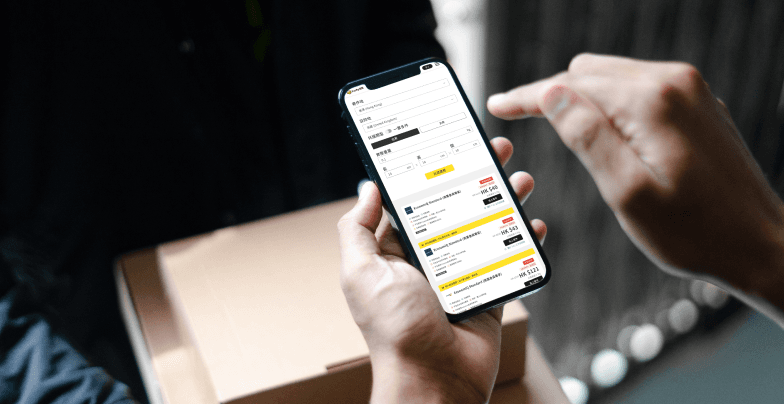
Say goodbye to the inefficient era of calling or emailing different agents one by one for quotes. On the Fuuffy platform, you just need to enter simple shipment information, such as port of loading, port of discharge, container type, and quantity. Our intelligent system will then present you with real-time quotes from multiple carefully selected and certified CTN agents within seconds. All fee details, including official fees and agent service fees, are clearly listed with absolutely no hidden charges. This completely transparent comparison model empowers you to make the best decisions based on clear data, ensuring you always get the most competitive prices on the market and easily save up to 30% on agent service fees.
Fuuffy integrates the complex multi-step application process into a simple and intuitive online platform. You no longer need to struggle with tracking application progress across different emails and folders. Simply create an order in our system, and you can upload all required documents (such as the bill of lading, invoice, packing list, etc.) on a single interface. Our system will guide you through each step and automatically check for document completeness, reducing delays caused by missing files. From submitting the application and confirming the draft to receiving the final CTN certificate, every stage can be completed and tracked online, making the entire process orderly and clear at a glance.
Even with a simplified process, you may still encounter specific national regulations or have questions during the application. Fuuffy's professional customer service team and our experienced CTN agent partners are always ready to provide you with expert support. Whether it's a question about the special requirements for a Cameroon BESC or an issue regarding Nigeria's SONCAP certification, we can provide accurate and timely answers and guidance. Our value lies not only in providing a price comparison tool but also in being your reliable logistics consultant, helping you foresee and mitigate potential risks to ensure every one of your shipments arrives at its destination smoothly and in compliance. Get an instant quote with Fuuffy now to save time and money!
In conclusion, the CTN (Cargo Tracking Note) is an indispensable document for exporting to Africa. Its application process involves complex multi-national regulations, cumbersome paperwork, and opaque pricing, posing a significant challenge for many exporters. Neglecting or mishandling a CTN can lead to severe consequences such as shipment delays, heavy fines, or even failure to clear customs. This article has thoroughly explored the importance of the CTN, detailed application steps, cost structures, and money-saving tips. The core value of the Fuuffy international courier comparison platform is to solve all these problems for you. We provide a transparent, efficient one-stop platform that allows you to instantly compare quotes from multiple certified agents, simplify document management, and have an expert team guiding you. Don't let tedious CTN applications slow down your business. Experience Fuuffy today and let us help you navigate the African market with ease, achieving smoother and more cost-effective international shipping.
Share


About Fuuffy
Fuuffy is an international express delivery pricing and reservation platform. With just one account, you can compare shipping costs from 16 international express companies (UPS, DHL, FedEx, etc.) and enjoy exclusive discounts of up to 70%, significantly saving shipping costs. Fuuffy also provides door-to-door pickup service, allowing you to complete the entire electronic customs declaration and shipping process in about 5 minutes at home or office. Fuuffy can be delivered to 180 countries and regions around the world within 3 working days at the fastest, providing you with the fastest and smoothest express delivery service!
Send parcels overseas from Hong Kong
How to avoid tariffs?
The tax exemption amounts vary from country to country. As long as you master the secret and keep the value of your items within the designated tax-free amount, you can easily save on customs duties. Fuuffy has compiled tax-free strategies for popular shipping routes to teach you how to save more money!